
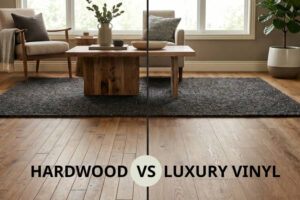
 The hardwood vs luxury vinyl plank debate goes beyond esthetics. Luxury vinyl flooring costs $3–$7 per square foot installed, while hardwood flooring ranges from $8–$15 per square foot installed. Hardwood floors can last 50 years or more. LVP lasts 15–25 years. The upfront savings don’t tell the whole story. We’ll break down what luxury vinyl flooring is and how it compares to traditional hardwood in terms of performance and durability. You’ll find the pros and cons of luxury vinyl tile and understand luxury vinyl plank vs hardwood resale value. You’ll also learn when engineered hardwood vs LVP makes sense. This guide will help you make the right investment for your home and budget.
What Is Luxury Vinyl Flooring and Hardwood: Understanding Your Options
What makes hardwood flooring unique
Hardwood flooring comes in two primary constructions: solid and engineered. Solid hardwood consists of a single piece of wood from top to bottom, 3/4 inch thick. Each plank features natural grain patterns and color variations that make every board unique. Knowing how to refinish distinguishes hardwood from synthetic alternatives. Most solid hardwood floors can be refinished 5-8 times over their lifetime.
Engineered hardwood uses a real wood veneer as the top layer with multiple plywood layers underneath arranged in perpendicular directions. This cross-ply construction makes engineered hardwood more stable and less prone to warping than solid wood. Both types respond to humidity and temperature changes. They expand in summer and contract in winter.
What is luxury vinyl plank flooring
Luxury vinyl plank flooring is a multi-layer synthetic product designed to replicate the look of natural wood. LVP consists of four to six layers: an attached underlayment (foam or cork), a core layer, a photographic image layer, a protective wear layer and a UV coating. The core determines the floor’s stability and comes in two types: WPC (Wood Plastic Composite) or SPC (Stone Plastic Composite).
WPC cores blend natural wood pulp with plastic and create a warmer, quieter floor underfoot. SPC cores use natural limestone powder and polyvinyl chloride for a denser, more dent-resistant plank. The wear layer, measured in mils (thousandths of an inch), protects against scratches and stains. Residential LVP features 12-mil wear layers, while commercial-grade products offer 20 mils or more.
Biggest structural differences between the two
The fundamental difference lies in material composition. Hardwood is natural wood throughout (solid) or features real wood veneer over plywood (engineered). LVP is synthetic and uses printed images to mimic wood appearance.
Hardwood can be sanded and refinished multiple times to restore its surface. LVP cannot be refinished. Once the wear layer degrades after 15-25 years, replacement becomes necessary. Hardwood is susceptible to moisture damage and requires immediate spill cleanup. Many LVP products are 100% waterproof, making them suitable for bathrooms, kitchens and basements where hardwood fails.
Hardwood vs Vinyl Plank Flooring: Performance and Durability Breakdown
Water resistance and moisture handling
LVP handles moisture exposure without damage. Both WPC and SPC cores are impervious to water and allow installation in bathrooms, kitchens, and basements. The tight-locking installation systems prevent water infiltration between planks. You can mop regularly, handle spills, and even tolerate standing water for short periods without warping or swelling.
Hardwood reacts differently to moisture. Wood expands when it absorbs moisture and contracts when air dries out. Solid hardwood doesn’t deal very well with humidity fluctuations. Engineered hardwood performs better due to its cross-layered construction that counteracts natural expansion and contraction. But excessive humidity can still cause cupping or distortion if proper expansion gaps weren’t left during installation. Spills need immediate cleanup to prevent staining and warping.
Scratch and dent resistance in daily life
The wear layer on LVP has aluminum oxide, one of the hardest substances around. Wear layers range from 6 mils to 20 mils, with thicker layers providing better protection. A 12-mil wear layer handles standard residential traffic. Commercial-grade 20-mil options resist heavy abuse. LVP outperforms hardwood in scratch resistance over time and works better for homes with pets and children.
Hardwood’s natural wood surface makes it more susceptible to scratching. Pet nails, furniture movement, and dropped objects leave marks, especially on softer species like walnut or pine. But engineered hardwood resists dents better than LVP. The plywood core’s cross-layered construction provides structural stability that distributes weight and resists compression from heavy objects.
Lifespan and long-term wear patterns
High-quality LVP lasts 20-30 years. Lower-quality products might need replacement after just 5-10 years. The wear layer determines longevity. Replacement becomes necessary once it degrades.
Hardwood floors can last 50 years or more, sometimes even a lifetime. Solid hardwood can be refinished 5-8 times over its lifetime. Engineered hardwood with a wear layer of 2mm or thicker can be refinished once or twice and potentially last 50+ years.
Maintenance requirements over time
LVP maintenance involves sweeping and damp mopping. No refinishing, sealing, or waxing required. Hardwood needs refinishing every 7 to 10 years. Professional refinishing costs $3.00 to $8.00 per square foot.
The Real Cost Comparison: Initial Investment vs Long-Term Value
Upfront material and installation costs
Material costs for hardwood range from $3.00 to $15.00 per square foot. Solid hardwood costs $5.00 to $12.00 and engineered hardwood runs $3.00 to $10.00. You’ll pay $7.00 to $20.00 per square foot to install solid hardwood and $6.00 to $15.00 for engineered varieties. Expect $8.00 to $25.00 per square foot installed for hardwood when you combine these costs.
LVP materials cost $2.00 to $7.00 per square foot, and installation adds $2.00 to $5.00. Total installed costs land between $3.00 and $7.00 per square foot. LVP runs $3,000 to $6,000 for a 500 square foot space compared to $9,000 to $18,000 for hardwood.
Luxury vinyl plank vs hardwood resale value
Hardwood delivers 70% to 80% return on investment at resale. The National Association of Realtors’ 2022 Remodeling Impact Report found that new wood flooring installation recovered 118% of its cost, while refinishing existing hardwood recovered 147%. Some data suggests hardwood can increase home value by 3% to 5%.
LVP recoups 50% to 70% of installed costs at resale. High-quality LVP positively influences buyer perceptions, especially in moisture-prone areas like kitchens. But real estate professionals report that hardwood remains the premium choice that adds more overall resale value.
Maintenance and refinishing expenses
Hardwood requires refinishing every 7 to 10 years at $3.00 to $8.00 per square foot. A 1,000 square foot area costs $3,000 to $8,000 to refinish. Hardwood maintenance totals approximately $7,500 over 30 years.
LVP requires only sweeping and damp mopping with no refinishing needed. Individual planks require replacement rather than refinishing once damaged.
Total cost of ownership over 20 years
LVP’s lower upfront cost appeals at first. But replacement becomes necessary due to its 15 to 25 year lifespan. Hardwood can be refinished multiple times and extends its life to 50+ years, often making it financially competitive despite higher costs at the start.
Which Flooring Is Actually Worth Your Money
Best rooms for hardwood flooring
Living rooms, bedrooms, and dining rooms work best for hardwood. These spaces see moderate foot traffic without excessive moisture exposure. Home offices benefit from hardwood’s smooth surface for rolling chairs and professional appearance. Hardwood lifts the visual appeal in areas where you want to showcase natural wood’s warmth and character.
Best rooms for luxury vinyl plank
Kitchens, bathrooms, basements, and laundry rooms just need LVP’s waterproof construction. Mudrooms and entryways handle wet shoes and heavy traffic better with scratch-resistant LVP. High-traffic hallways in homes with pets or children see less visible wear with luxury vinyl plank flooring.
Hardwood makes financial sense in certain situations
Planning to stay long-term justifies hardwood’s higher upfront cost. Resale value matters if you want buyers willing to pay premium prices for real wood. Minimal moisture concerns in your home make hardwood maintenance manageable.
LVP is the smarter investment in other cases
Budget constraints favor LVP’s lower material and installation costs. Moisture-prone spaces require waterproof flooring that won’t warp. DIY installation capability with click-lock systems saves labor expenses[321].
Engineered hardwood vs LVP as a middle ground
Engineered hardwood delivers real wood appearance with better moisture resistance than solid hardwood. You can refinish engineered floors with 2mm+ veneer thickness and extend lifespan beyond LVP’s capabilities while costing less than solid hardwood.
Both flooring types deliver value in different scenarios. Hardwood wins for long-term investment and resale value, while LVP excels in moisture-prone areas and tight budgets. Your choice depends on your home’s specific needs, your timeline, and how much you value natural materials. Pick hardwood for spaces where you want lasting beauty. Choose LVP where practicality matters most.
The Design Emporium Can Help You With Flooring Design and Installation Services
When it comes to flooring design and installation, attention to detail is paramount. The choice of flooring material, whether hardwood, laminate, tile, or carpet, sets the tone for the entire space.
> Learn More
FAQs
Q1. How long does luxury vinyl plank flooring last compared to hardwood? LVP typically lasts 15-25 years depending on quality, with high-end products potentially reaching 30 years. Hardwood floors can last 50 years or more, and with proper refinishing, they can even last a lifetime. The key difference is that hardwood can be refinished multiple times to restore its appearance, while LVP cannot be refinished and must be replaced once the wear layer degrades.
Q2. Can hardwood floors handle water and moisture as well as LVP? No, hardwood is much more susceptible to water damage than LVP. Luxury vinyl plank is completely waterproof and can handle spills, moisture, and even standing water without warping or swelling. Hardwood expands when it absorbs moisture and contracts when dry, making it unsuitable for bathrooms, basements, and other moisture-prone areas where LVP excels.
Q3. Which flooring option adds more value when selling a home? Hardwood flooring provides significantly better resale value, recovering 70-80% of installation costs and sometimes increasing home value by 3-5%. Some studies show hardwood refinishing can recover up to 147% of costs. LVP typically recoups only 50-70% of installation costs, though high-quality LVP can positively influence buyers, especially in moisture-prone rooms.
Q4. Is LVP more scratch-resistant than hardwood flooring? Yes, LVP generally offers better scratch resistance than hardwood. The aluminum oxide wear layer on quality LVP (especially 12-mil or thicker) protects against scratches from pets, furniture, and daily wear better than hardwood’s natural surface. However, engineered hardwood resists dents better than LVP due to its cross-layered plywood construction that distributes weight more effectively.
Q5. What are the total costs of ownership over 20 years for each flooring type? While LVP has lower upfront costs ($3-$7 per square foot installed vs. $8-$15 for hardwood), hardwood may be more cost-effective long-term. Hardwood requires refinishing every 7-10 years at $3-$8 per square foot, totaling approximately $7,500 over 30 years. LVP needs no refinishing but may require complete replacement within 20 years, potentially making hardwood financially competitive despite higher initial investment.
Contact us (859-283-5352) for a free consultation!
—
 About The Design Emporium
The Design Emporium is your destination for all your home improvement needs. From cabinets to countertops, and from hardwood flooring to carpet, we offer a wide range of high-quality products to beautify your home. Our selection includes quartz countertops, various types of flooring such as hardwood, laminate, vinyl plank, and carpet, as well as a variety of tile options. Whether you’re renovating your kitchen, bathroom, or any other living space, we have the products to bring your vision to life. With our commitment to quality and customer satisfaction, we are your trusted partner for all your home renovation projects.
> Learn More